
When a homeowner reached out to us, they weren’t starting from scratch. They had already scheduled an inspection with another roofing company after noticing general wear on their roof. That inspection ended with a clear recommendation: full roof replacement.
What didn’t sit right with the homeowner was the age of the roof.
At around 14 years old, the roof wasn’t new, but it also didn’t feel old enough to justify immediate replacement. There were no active leaks, no missing shingles, and no obvious signs of failure from the ground. Before committing to something that significant, they decided to get a second opinion.
That’s when our team at Wagner Roofing & Construction Solutions came out to take a closer look.
What We Found During Our Inspection
When we inspected the roof, we focused on condition rather than age alone. The shingles were clearly showing signs of wear. They had begun to dry out, and there was some granule loss in areas that see the most sun exposure. That’s a common pattern for a roof at this stage of its life.
What we did not find were signs of structural failure. There were no active leaks, no soft decking, and no widespread damage that would indicate the roof had reached the end of its usable life. From a performance standpoint, the roof was aging, not failing.
That distinction mattered. A roof can look worn without being beyond help.
Why Replacement Wasn’t the Only Option
We explained to the homeowner that while replacement may eventually be necessary, it didn’t appear to be the only option right now. Roofs around this age often fall into a gray area. They’re no longer new, but they still have value left when evaluated honestly.
That’s where roof rejuvenation became part of the conversation.
Many homeowners are never told about roof rejuvenation because it isn’t appropriate for every roof. It’s not meant for roofs with structural issues or widespread damage. But for a roof that is still intact and simply showing age-related wear, it can be an effective way to extend performance and delay replacement.
How Roof Rejuvenation Addressed the Real Issue
Over time, asphalt shingles lose the oils that help them stay flexible and weather-resistant. Sun exposure and temperature changes slowly pull those oils out, leaving shingles more brittle even if they haven’t failed yet.
Roof rejuvenation works by restoring those lost oils. Instead of coating the roof, the rejuvenation treatment penetrates the shingles and helps them regain flexibility. This allows the shingles to better handle expansion, contraction, and ongoing weather exposure.
In this case, roof rejuvenation addressed what we were actually seeing on the roof. Age-related drying, not structural breakdown.
How Much Life Roof Rejuvenation Added
While roof rejuvenation doesn’t make a roof brand new, it can meaningfully extend the life of a roof that still has good bones. For this homeowner, rejuvenation added several additional years of usable life, giving them time to plan instead of rushing into a replacement.
That extra time made a real difference. It allowed the homeowner to approach future roofing decisions on their own terms, with less pressure and more clarity about what the roof actually needed.
What the Roof Rejuvenation Process Looked Like
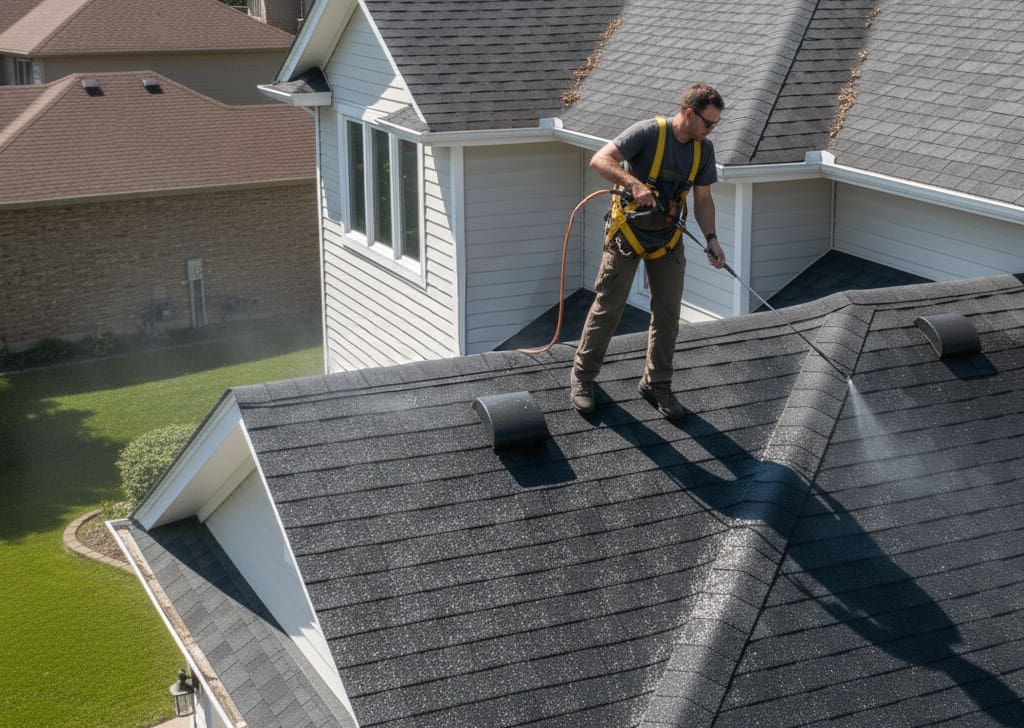
Before applying the rejuvenation treatment, our team confirmed the roof was a good candidate. We addressed minor concerns, cleared debris, and prepared the surface so the treatment could properly absorb into the shingles.
Once applied, the rejuvenation solution soaked into the shingles rather than sitting on top. The goal wasn’t to make the roof look new, but to help it perform better as it continued to age.
After treatment, the shingles regained flexibility and showed improved overall condition, helping the roof handle seasonal changes more effectively moving forward.
Why Getting a Second Opinion Made the Difference
For this homeowner, the biggest takeaway wasn’t just the roof rejuvenation itself. It was understanding that replacement isn’t always the immediate answer, even when a roof is no longer new.
Getting a second opinion helped clarify the difference between a roof that is failing and one that is simply aging. That clarity made it easier to choose a solution that matched the roof’s actual condition instead of relying on age alone.
Making Informed Decisions About Aging Roofs
Not every roof showing signs of wear needs to be replaced right away. In many cases, roofs around 14 years old still have usable life left when they’re evaluated carefully.
Roof rejuvenation gave this homeowner additional time, improved performance, and a clearer path forward without replacing a roof before it was truly necessary.
For homeowners facing similar recommendations, taking the time to understand all available options can lead to more confident decisions and less unnecessary stress.