
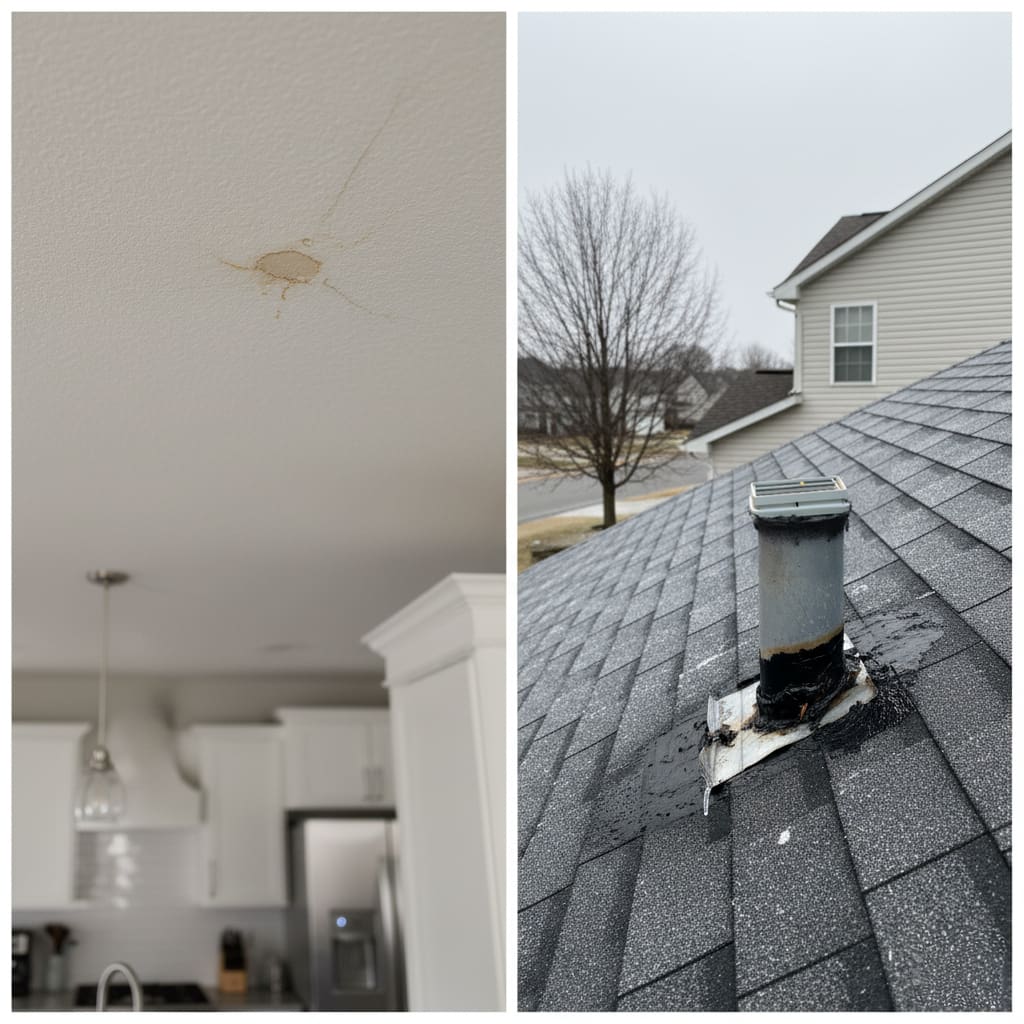
In early fall, a Toledo homeowner noticed a small water spot beginning to form on the ceiling near their kitchen. It showed up after a stretch of steady rain and seemed minor at first. With winter still weeks away, they assumed it was something that could be handled quickly without much disruption.
A handyman sealed around a roof vent with roofing tar and assured them the issue was resolved. For the rest of fall, the ceiling spot stayed about the same. There was no dripping and nothing that demanded immediate attention, so the repair faded into the background as colder weather moved in.
Winter changed that.
How Fall Roofing Issues Can Escalate Once Winter Sets In
As temperatures dropped in Toledo, snow began to settle on the roof. During the day it would melt, then refreeze overnight. After one of these freeze and thaw cycles, the water spot grew darker and slightly larger.
That shift is often when homeowners realize the problem never fully went away. What feels manageable in fall can become harder to ignore once snow and ice put pressure on weak areas of the roof.
At that point, the homeowner wasn’t looking for another patch. They wanted to understand why the original fix didn’t last and what would actually stop the issue from continuing.
Why Roofing Repair Around Vent Pipes Often Misses the Mark
Vent pipes are one of the most common places we see roof leaks start. These penetrations depend on proper flashing and layered waterproofing to move water away from the opening.
In this case, the fall repair focused only on the surface. Roofing tar was applied over existing materials, but the flashing beneath had already failed. While tar can slow water temporarily, it isn’t designed to handle snow buildup or water working its way under shingles.
Once winter weather arrived, melting snow followed paths it normally wouldn’t. Without functioning flashing to guide that water away, moisture was able to slip beneath the roofing materials.
What We Addressed During the Winter Roofing Repair
When our team inspected the roof, we focused first on exterior conditions. The shingles around the vent showed signs of wear, and the flashing no longer formed a reliable seal.
Winter roofing repair takes a different approach than warm-weather work. Conditions are less forgiving, and temporary solutions tend to fail faster. Instead of adding another layer of sealant, the goal was to restore proper water flow around the penetration.
We removed the affected shingles, installed new underlayment and moisture protection, and replaced the flashing so it integrated correctly with the surrounding roof system. In areas more exposed to winter conditions, additional ice and water protection was added to help manage snowmelt moving forward.
Once that work was complete, the roof could shed water the way it was intended to, even during fluctuating winter temperatures.
Why Timing Plays a Big Role in Roofing Repair
Fall roof issues often feel less urgent because the weather is mild and leaks can appear controlled. Winter has a way of exposing whether a repair actually solved the problem.
Freeze and thaw cycles harden old sealants, widen small gaps, and push water into places it could not reach before. Repairs that only address the surface rarely hold up once conditions change.
Catching these issues earlier in the season gives homeowners more options and reduces the risk of winter-related complications.
How Homeowners Can Lower the Risk of Winter Roofing Repair Problems
Early warning signs don’t always look dramatic. Cracked sealant, loose flashing, or aging shingles around roof penetrations are easy to overlook, especially when there’s no active leak.
Scheduling a professional inspection in fall can help identify whether a previous repair was meant as a short-term fix or a long-term solution. That extra clarity often makes a big difference once winter weather arrives.
Taking a Practical, Long-Term Approach to Roofing Repair
For this Toledo homeowner, addressing the roofing repair correctly brought peace of mind through the rest of winter. Instead of relying on a surface fix, the repair focused on how the roof manages water across changing seasons.
A well-handled roofing repair does more than stop a leak. It helps the roof perform consistently, protects vulnerable areas, and reduces the chance of the same issue returning year after year.
If a roof issue started small and became more noticeable with colder weather, having it evaluated sooner rather than later can help prevent ongoing frustration and repeated repairs.